
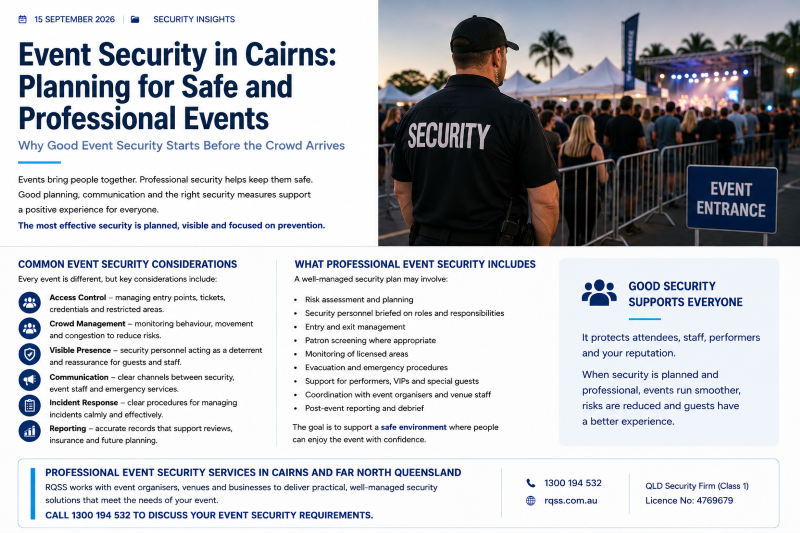
Why Good Event Security Starts Before the Crowd Arrives
Event security is often most visible once people begin arriving.
But by that stage, many of the most important security decisions should already have been made.
Good event security starts with understanding the venue, expected attendance, access points, operating environment, likely risks and the responsibilities of everyone involved.
The objective is not simply to respond when something goes wrong. It is to reduce the likelihood of problems arising in the first place.
Every Event Has a Different Security Environment
There is no single event security model that suits every occasion.
A corporate function may involve invited guests, controlled access and a relatively formal environment.
A public event may involve large numbers of people moving through several entry points.
A licensed venue or entertainment event may require greater attention to crowd behaviour, intoxication, access restrictions and incident response.
Outdoor events may involve temporary fencing, changing weather conditions and broader site boundaries.
The security plan should therefore reflect the actual event rather than simply assigning a predetermined number of officers.
Security Planning Should Begin Before the Event
Effective event security begins with preparation.
Before personnel are deployed, the provider should understand:
- The nature of the event
- Expected attendance
- Venue layout
- Entry and exit points
- Restricted areas
- Emergency access
- Alcohol service where relevant
- VIP or controlled areas
- Likely crowd behaviour
- Event organiser expectations
That information allows security personnel to understand their role before the event begins.
The best time to identify an event security problem is before the gates open.
Planning allows organisers and security personnel to resolve issues before they become operational problems.
Access Control Is Often the First Line of Security
Controlling who enters an event, and through which entry point, is one of the most important security functions.
Depending on the event, access control may involve:
- Checking tickets or credentials
- Monitoring invited guest lists
- Controlling staff and contractor entry
- Restricting access to back-of-house areas
- Managing VIP areas
- Monitoring entry and exit points
- Preventing unauthorised re-entry
Clear access procedures reduce confusion for guests and provide security personnel with a defined framework for managing entry.
Crowd Management Is About More Than Numbers
Crowd management is not simply a question of how many people are present.
The behaviour and movement of the crowd matter just as much.
Security personnel may need to monitor:
- Congestion at entrances
- Queues
- Movement between event areas
- Pressure around stages or attractions
- Behaviour associated with alcohol
- Disputes between patrons
- Emergency exit routes
A professional security presence can help organisers identify problems early and respond before they escalate.
Effective crowd management is usually preventative.
It involves awareness, communication and early intervention rather than waiting until a situation has already become difficult to control.
Security Officers Need Clear Roles
Event security becomes less effective when personnel are unsure about their responsibilities.
Each officer should understand where they are positioned, what they are expected to monitor and who they report to.
Depending on the event, roles may include:
- Entry control
- Crowd monitoring
- Back-of-house security
- Restricted-area access
- Stage or performer security
- Venue perimeter security
- Incident response
- Supporting event management
Clear roles help prevent duplication and ensure important areas are not overlooked.
Communication Is Critical During an Event
Events can change quickly.
A security provider needs effective communication between personnel and event management.
That may include:
- Radio communication
- Defined escalation procedures
- Named event contacts
- Emergency communication processes
- Clear reporting lines
Security personnel should know who has authority to make decisions and who needs to be informed when an incident occurs.
Poor communication can turn a manageable issue into a larger problem.
Professional Presentation Matters
Event security personnel are often highly visible.
Their conduct can influence how guests perceive both the security provider and the event organiser.
Professional event security requires more than physical presence.
Officers should be able to communicate clearly, remain calm, provide directions and interact appropriately with members of the public.
The best event security personnel are visible without unnecessarily dominating the event environment.
Incidents Need to Be Managed Proportionately
Not every event incident requires the same response.
Some matters may be resolved through simple communication.
Others may require removal from the venue, management involvement or contact with emergency services.
Security personnel need to understand the limits of their role and respond proportionately to the circumstances.
The objective should be to resolve situations safely and professionally while minimising disruption to the event.
Reporting Matters After the Event
The end of an event does not necessarily mean the end of the security function.
Where incidents occur, accurate reporting can provide organisers with a valuable record of what happened.
Reports may assist with:
- Internal event reviews
- Insurance matters
- Police enquiries
- Complaints
- Future event planning
- Changes to venue or security procedures
Good reporting also helps identify patterns and lessons that may improve future events.
Event Security in Cairns Requires Local Understanding
Cairns has a strong tourism, hospitality and events economy.
Events can involve local residents, visitors, contractors, performers and businesses operating in a regional environment.
Local knowledge can assist with staffing, venue familiarity, communication and understanding the practical conditions in which Cairns events operate.
That regional understanding is particularly important where events occur outside traditional metropolitan venues.
Where RQSS Fits
Regional Queensland Security Services provides professional personnel-based security services across Cairns and Far North Queensland.
Our event security focus includes:
- Event security officers
- Crowd control personnel
- Access control
- Entry and exit management
- Restricted-area security
- Incident response
- Professional reporting
- Coordination with event organisers
Our approach is to understand the event first and then determine what security support is appropriate.
If you are comparing providers, read Choosing a Security Company in Cairns: 8 Questions Businesses Should Ask.
For a broader overview, see Security Services in Cairns: What Businesses Should Look For.
A Final Thought
Good event security should support the event rather than become the event.
When it is planned properly, security helps guests move safely, organisers remain informed and incidents are managed professionally.
The most effective event security often begins well before the first guest arrives.
Planning, communication and accountability are what make the visible security presence effective.
